
Whether you’re looking to find a run club in London, meet like-minded runners near your home or workplace, or discover a welcoming run community, Find A Run Club (FARC) makes it easy. As London’s free run club directory, we connect runners with local running groups while also helping run clubs attract new members and grow their communities.
With the number of London run clubs booming since the Covid pandemic, choosing the right group can feel overwhelming. That’s one of the main reasons we created FARC— to help runners discover clubs that match their goals, pace, location, and interests.
As London’s dedicated run club directory, we were excited to attend a recent event hosted by The Mood Boosters at Run Limited, where co-founder Dr. Marcus Bull shared preliminary research into what runners are really looking for from their run club experience.
For this article, we define a run club as an informal group of people who come together to run and/or walk. While a shared love of running is the common thread, many clubs also bring people together through shared interests or identities, including geography, workplace, brand affinity, heritage, sexual orientation, occupation, or (dis)ability.
Although Dr. Bull’s initial research involved interviews with only 13 intermediate-to-advanced level runners, the findings offer valuable insights for London run clubs looking to improve their policies, create more inclusive communities, and attract new runners. If you’d like to contribute to this ongoing research, you’ll find details on how to get involved at the end of this post.
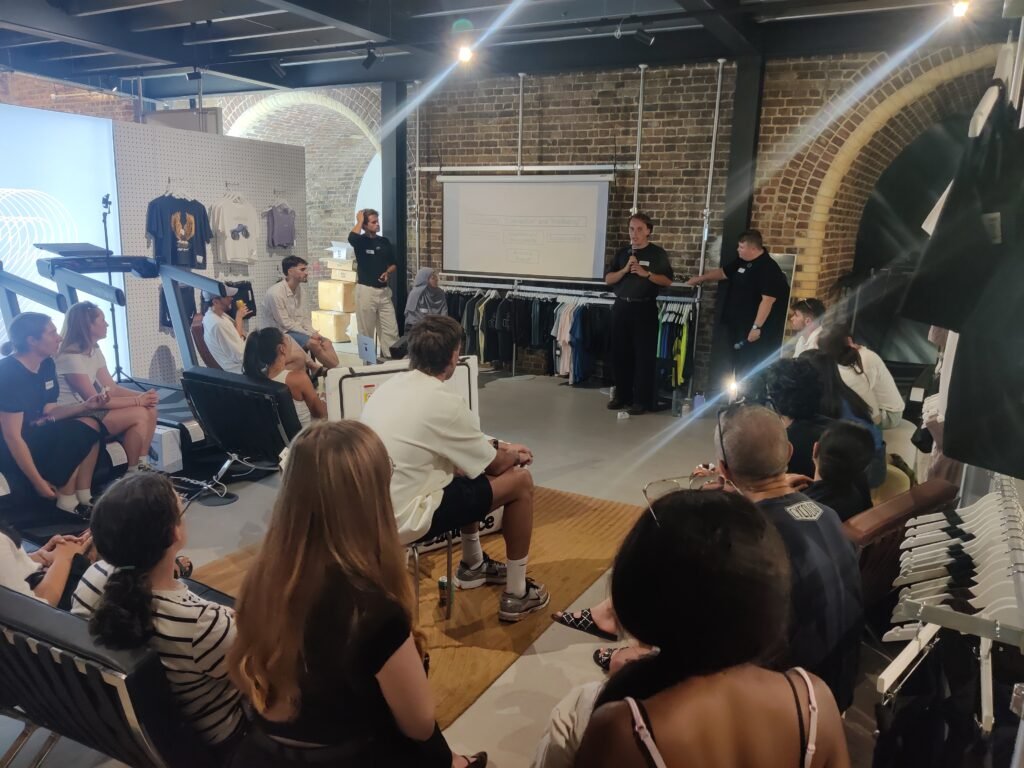
Here are some key bits we found interesting:
- On a global scale, Strava run clubs are up 3.5x yet most runners are not in a club
- There are ~800 run clubs in London (unclear if this include England Athletics registered clubs)
- Most run clubs are free which runners see as a benefit as London is an expensive city
- Run clubs can provide community and connection to members, which leads to improved wellbeing
- There is no required formal training or guidance on how to create and lead a run club
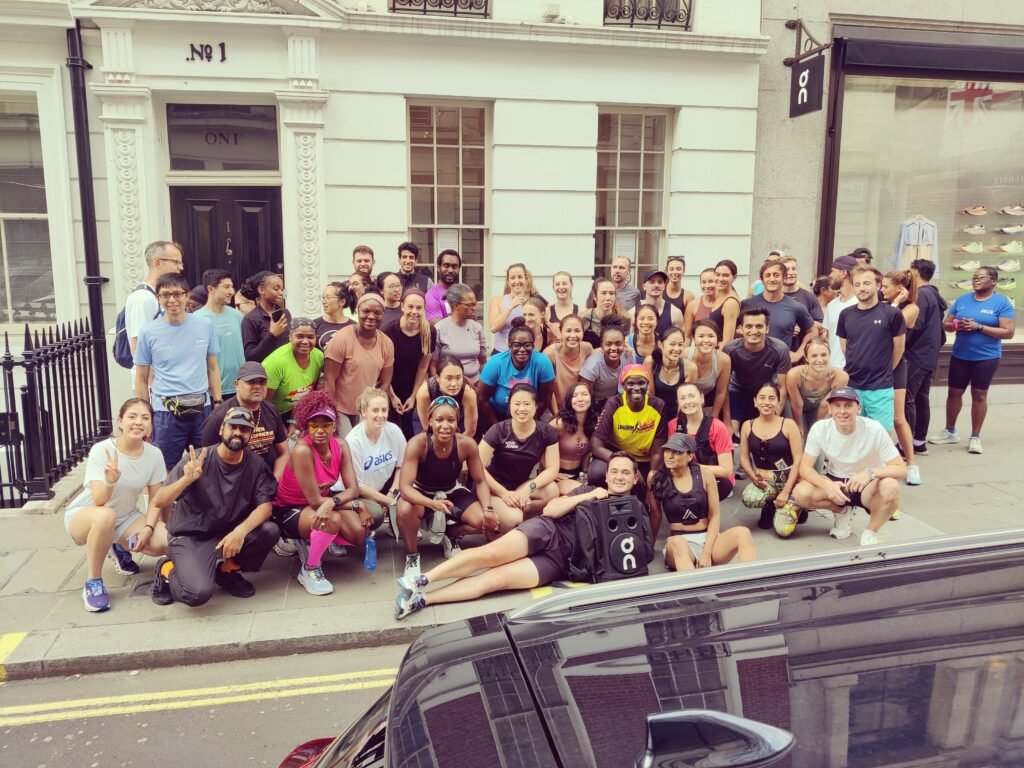
Four main themes came out of the interviews: accessibility; “double-edged sword” of run clubs; community, connection, and well-being; navigating the urban space.
Accessibility: Relates to the pace the clubs run and whether it matches what they advertise (is everyone welcome or is the pace too fast for some?). Free run clubs are incredibly accessible for Londoners. Life in London is already expensive enough so to have affordable health and social alternatives is welcomed. Finally, diversity and inclusion can make a club more accessible. How old are your runners? Do you share a common heritage? Is the club for women only? These are examples of how a club can be accessible to some but not others. There was further discussion around if run clubs should be for anyone vs. everyone.
Double-edged sword of run clubs: Are they creating peer pressure or are motivating? Is comradarie being developed or are you comparing yourself to the others in the group? Is there space for all runners or is it a segregated space defined by the commonality?
Community, connection and well-being: Does your run club inspire you and add accountability to your training regime? The shared passion of your run club members can also provide emotional support and companionship in a big city where it can be hard to meet people.
Navigating the urban space: London constantly has people moving in and out. The transient nature of a big city can be a bit unnerving. A run club offers consistency that may not be found elsewhere. Running in numbers can also provide relief of the mental load of safety awareness for female and female-presenting runners. However, running in London provides a lot of challenges for run lub leaders as they have to worry about traffic, pedestrians, and the use of public spaces.
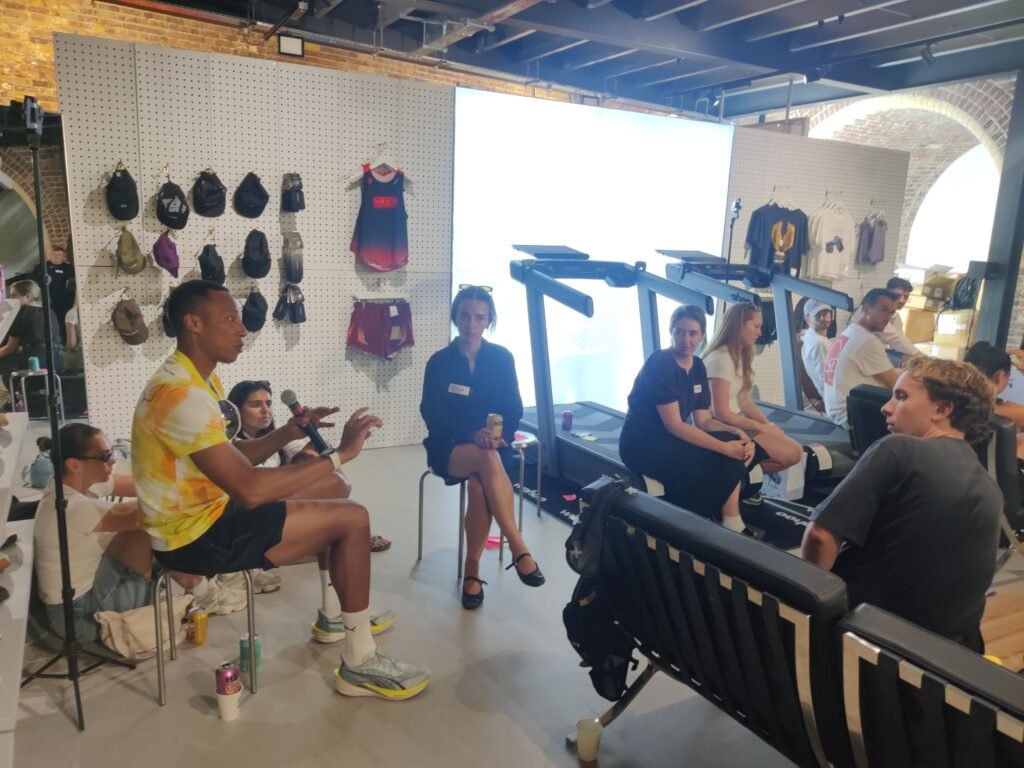
We spent some time discussing how there is a lack of oversight to start a run club. No training or certifications are needed- just a willingness to volunteer your time (and a lot of it!). England Athletics offers Leadership in Running Fitness and Coach in Running Fitness courses which were viewed as a solid foundation for run club leaders. Other advisable certifications include first aid, safeguarding, and mental health first aid.
The Mood Boosters recommended visiting Buddle.co for free learning and support resources for people creating their own sport community (in any discipline). It is Buddle’s mission to share the latest information, training and tools to help clubs and organisations overcome challenges and make the most of the opportunities available to them. They are also passionate about enabling organisations to be safe, inclusive, agile and resilient enough to secure their long-term future and unlock the advantages of sport and physical activity for everyone. Definitely have a look around and let us know in the comments which resources you found the most helpful on Buddle’s site.
If you are interested in joining the Run Club Research Network to help further develop this study and the resources it creates, you can sign up here. Thanks to The Mood Boosters for hosting this event. We learned so much and are looking forward to supporting the run clubs in this network.
We are also going to be sharing advice based on our experiences at different run clubs here on the blog, so keep checking back for more information as we grow FARC together.
Comments